
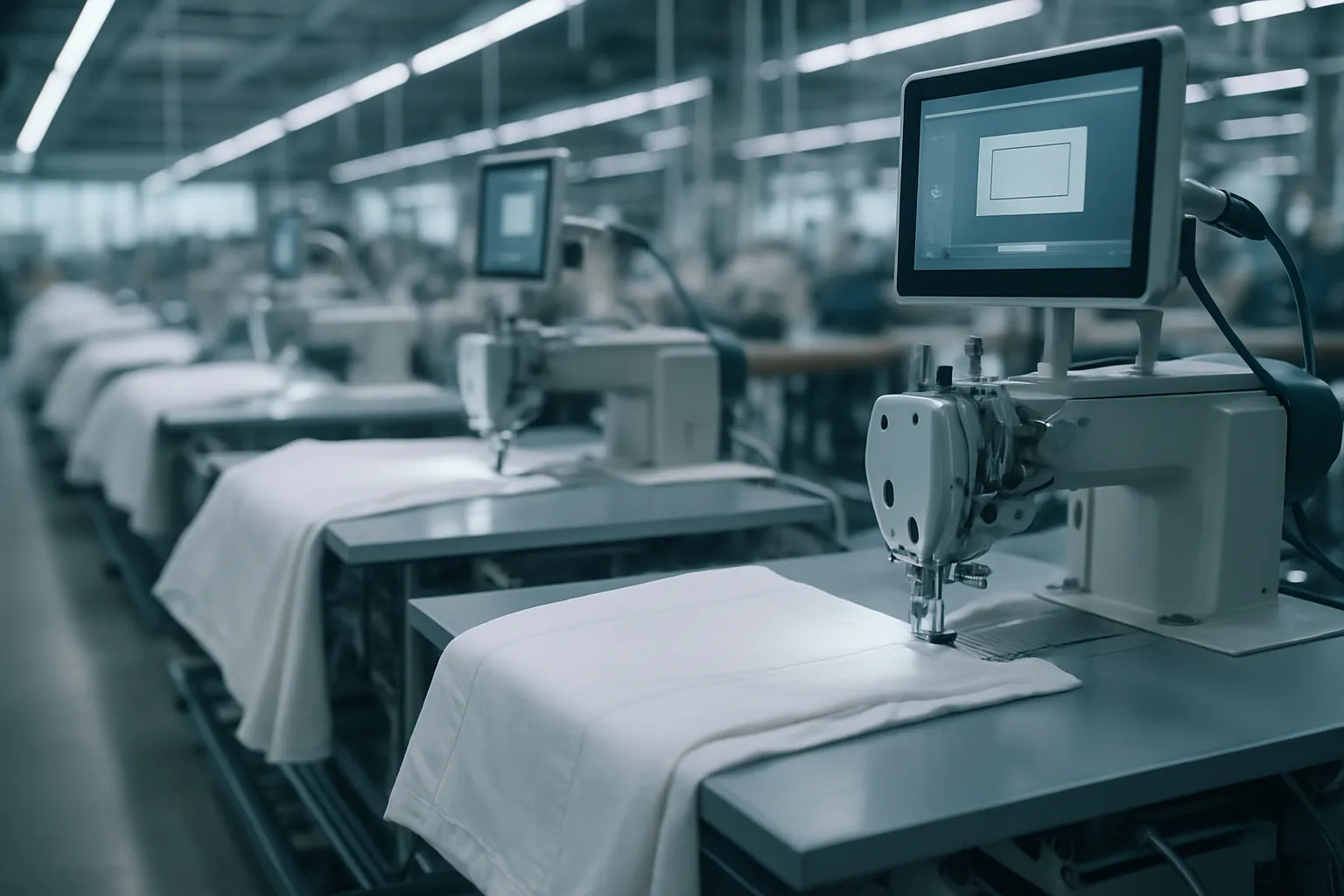
Digitalization plays a vital role in the textile industry in increasing production efficiency, optimizing costs and providing a competitive advantage. Digital solutions such as supply chain planning, production scheduling, ERP systems and capacity planning modernize companies' production processes, enabling them to respond to customer demands faster and more accurately.
Contributions of Digitalization to the Textile Industry
Supply Chain Planning and Management
Supply chain and inventory management form the foundation of operations in the textile industry. Supply chain management systems and material requirements planning (MRP) software integrate all processes from raw material procurement to product delivery, reducing costs and increasing transparency.
- Supply Planning System: Offers an effective solution for the timely procurement of raw materials and the prevention of excess inventory.
- Supply Chain Optimization: Improves procurement processes and logistics operations with real-time data.
Production Planning and Scheduling
Production planning and control programs help manage production processes better in textile factories. Finite capacity planning tools ensure the efficient use of workforce and machine resources.
- Production Scheduling Program: Provides detailed planning for the on-time delivery of orders.
- Production Planning Module: Facilitates the creation of a master production schedule and a weekly production plan.
ERP and MES/MOM Integration
Enterprise resource planning (ERP) and manufacturing operations management systems (MES/MOM) integrate all processes of textile companies, from production to sales and operations planning.
- Integrated Production Planning: Combines all processes on a single platform, accelerating data flow and improving decision-making processes.
- Textile Production Planning Schedule: Increases efficiency by identifying bottlenecks on the production line.
Workforce Planning and Strategic Management
Digitalization increases efficiency by optimizing workforce planning processes. Capacity requirements planning and workforce management tools ensure employees are deployed in the most efficient way.
- Sales and Operations Planning (S&OP): Manages resources effectively based on demand forecasting.
- Textile Production Planning Program: Responds quickly to customer demands through make-to-order production planning.
Digital Transformation and Industry 4.0
In the textile industry, digital transformation solutions increase companies' competitive advantage and support innovative business models.
- Digital Transformation Consultancy: Guides the modernization of business processes.
- Industry 4.0 and Digital Transformation Solutions: Enable smart production processes with IoT and big data analytics.
The Advantages Offered by Digitalization
- Efficiency and Cost Control: Digital tools reduce costs by optimizing inventory levels and accelerate production processes.
- Customer Satisfaction: Increases the capacity to respond to customer demands with personalized services and fast delivery.
- Competitive Advantage: Enables companies to stand out in the market through technological innovation.
Digitalization is an inevitable process for increasing operational efficiency in the textile industry and being prepared for future challenges. Using digital solutions across all processes, from supply chain management to production scheduling, and from ERP integration to workforce planning, gives companies a competitive advantage and supports sustainable growth.